Short Videos Could Have an Insidious Effect on Children's Brains
4 min read
17 დეკემბერი, 2025
Summary
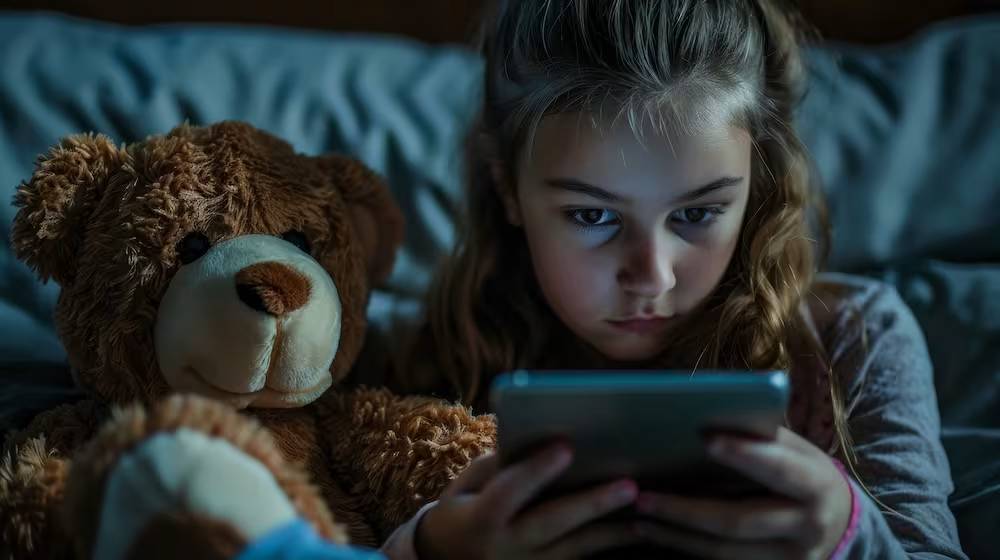
The core issue is that short-form content (TikTok, Reels) conditions children's brains to expect instant gratification. This reduces their ability to engage in "slow" activities like reading or studying. Over time, this "insidious effect" can lead to lower cognitive endurance and behavioral challenges.
Online short-form video has shifted from a light distraction to a constant backdrop in many children's lives.
What used to fill a spare moment now shapes how young people relax, communicate, and form opinions, with TikTok, Instagram Reels, Douyin, and YouTube Shorts drawing in hundreds of millions of under-18s through endlessly personalised feeds.
These apps feel lively and intimate, offering quick routes to humour, trends, and connection, yet their design encourages long sessions of rapid scrolling that can be difficult for young users to manage. They were never built with children in mind, although many children use them daily and often alone.
Short-form videos are engineered to keep the brain in a constant state of excitement. By removing natural pauses, they weaken a child's ability to focus and control impulses, which is scientifically linked to shorter attention spans.
Attention hijacked
Beyond focus, short videos harm physical health by disrupting sleep through both biological (light) and emotional stimulation. It also damages mental health by fueling social anxiety and self-esteem issues through constant comparison with unrealistic online lives.
Younger children are more susceptible
The rise of short-form video (15-90 seconds) represents a fundamental shift in how children spend their time and develop cognitively. These platforms are engineered to bypass conscious choice, using algorithms that provide constant "dopamine hits" through endless novelty. This creates a state where a child's attention is essentially hijacked, making it difficult for them to engage in "slow" activities like reading or deep study. Because the feed never pauses, the brain loses those critical "natural breaks" that are necessary for resetting focus and practicing impulse control.
Beyond cognitive impact, the "TikTok brain" phenomenon significantly harms physical and emotional well-being. The constant emotional highs and lows of rapid-fire content, combined with blue light exposure, disrupt sleep cycles and increase social anxiety. For younger children, who lack mature self-regulation, the risk is even higher; they are often exposed to disturbing or inappropriate content without any context or warning. This environment is particularly dangerous for children with ADHD, creating a cycle where rapid content intensifies their symptoms, ultimately robbing them of the unstructured "quiet time" necessary for developing creativity and internal focus.
New guidelines
There are encouraging signs of change as governments and schools begin to address digital wellbeing more explicitly. In England, new statutory guidelines encourage schools to integrate online safety and digital literacy into the curriculum.
Some schools are restricting smartphone use during the school day, and organisations such as Amnesty International are urging platforms to introduce safer defaults, better age-verification, and greater transparency around algorithms.
At home, open conversation can help children understand their habits and build healthier ones. Parents can watch videos together, discuss what makes certain clips appealing, and explore how particular content made the child feel.
parent and child looking at their phone
Parents can watch videos with their children to explore how particular content impacts them. (zeljkosantrac/Getty Images Signature/Canva)
Establishing simple family routines, such as keeping devices out of bedrooms or setting a shared cut-off time for screen use, can protect sleep and reduce late-night scrolling. Encouraging offline activities, hobbies, sports, and time with friends also helps maintain a healthy balance.
Short-form videos can be creative, funny, and comforting. With thoughtful support, responsive policies, and safer platform design, children can enjoy them without compromising their wellbeing or development.The Conversation
Katherine Easton, Lecturer, Psychology, University of Sheffield